Security Officer (SO) vs Assistant Security Officer (ASO): Roles in Industrial Security
Security is a critical component of every business operation, especially in industrial environments where valuable assets, sensitive materials, and a large workforce must be protected. Factories, warehouses, manufacturing plants, and corporate campuses require structured security management to ensure safety, prevent theft, and maintain smooth operations.
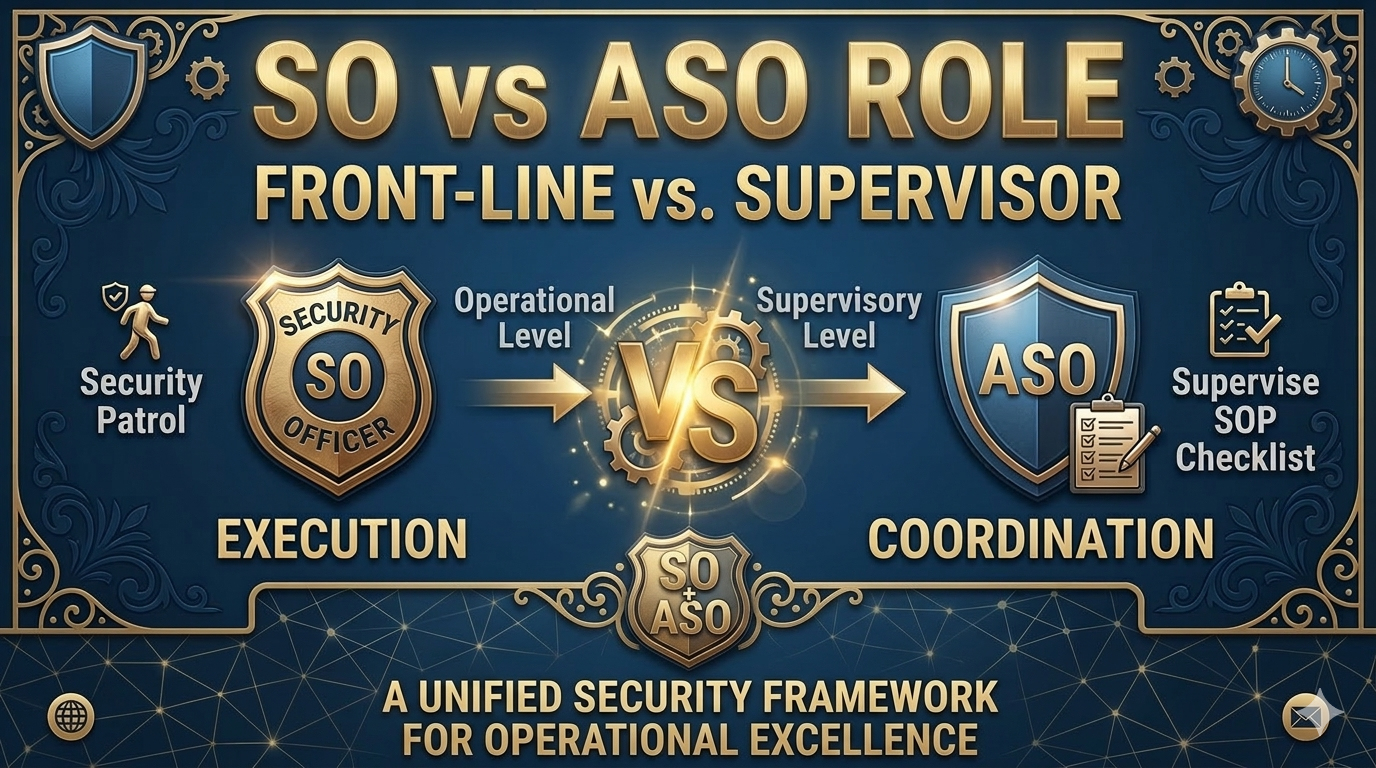
Two important positions within a professional security team are the Security Officer (SO) and the Assistant Security Officer (ASO). While both roles are essential in maintaining workplace safety and protecting company assets, their responsibilities and levels of authority differ significantly.
Understanding the roles of Security Officers and Assistant Security Officers helps organizations build a stronger and more effective security framework. This article explains the responsibilities of each role, their key differences, and why both positions are essential in maintaining security within industrial campuses.
What is a Security Officer (SO)?
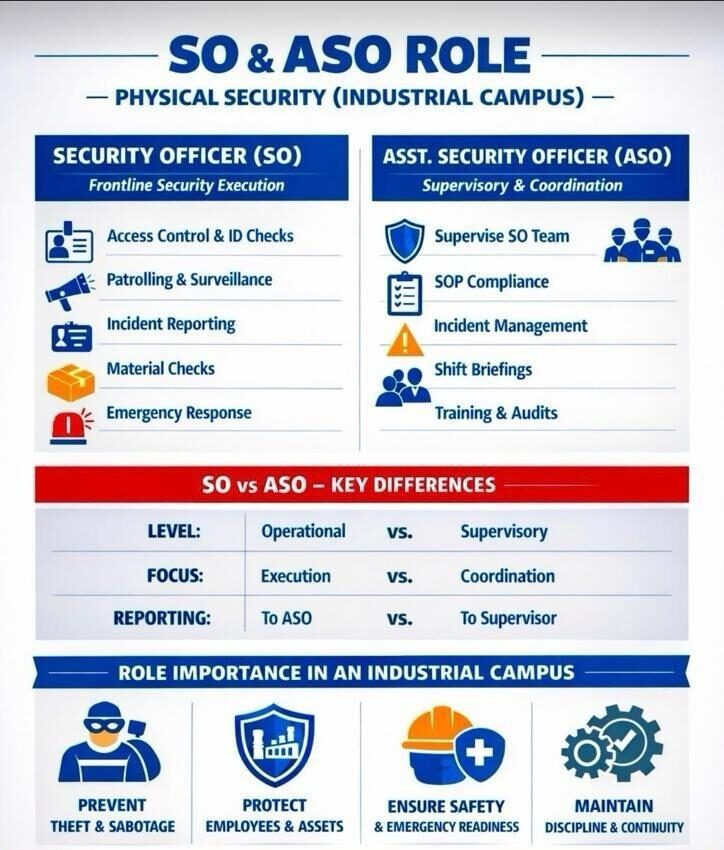
A Security Officer (SO) is responsible for frontline security duties. These professionals are the first line of defense against unauthorized access, theft, vandalism, and other security threats.
Security Officers are stationed at entry points, patrol company premises, monitor surveillance systems, and respond to emergencies. Their main objective is to maintain a safe environment for employees, visitors, and company property.
In many industrial facilities, Security Officers operate around the clock to ensure continuous protection of assets and infrastructure.
Key Responsibilities of a Security Officer
Access Control and Identification Checks
One of the primary responsibilities of a Security Officer is controlling access to the facility. This includes verifying identification documents and ensuring only authorized personnel are allowed to enter restricted areas.
Security Officers may also manage visitor registration systems, issue temporary access passes, and monitor entry and exit points. By maintaining strict access control, security officers help prevent unauthorized entry and potential security breaches.
Patrolling and Surveillance
Routine patrols are an important part of security operations. Security Officers regularly patrol the premises, including buildings, parking areas, warehouses, and surrounding property.
These patrols allow officers to:
- Detect suspicious behavior
- Identify safety hazards
- Check doors, gates, and restricted areas
- Ensure security equipment is functioning properly
In addition to physical patrols, Security Officers monitor CCTV surveillance systems to maintain constant observation of the property.
Incident Reporting
Whenever a security incident occurs, it must be documented and reported accurately. Security Officers are responsible for recording details of unusual activities, accidents, or security breaches.
Incident reports typically include:
- Time and location of the incident
- Description of the event
- Individuals involved
- Actions taken to resolve the situation
Proper documentation helps management evaluate security performance and improve future safety measures.
Material and Asset Checks
Industrial facilities often handle valuable equipment, machinery, and raw materials. Security Officers inspect materials entering or leaving the premises to prevent theft or unauthorized removal.
These inspections may include checking delivery documents, verifying cargo, and ensuring that goods are transported according to company procedures.
Emergency Response
Security Officers are trained to respond quickly to emergencies such as fires, medical incidents, security threats, or accidents.
During emergencies, they may:
- Activate emergency procedures
- Assist evacuation efforts
- Provide first aid support
- Contact emergency services
Their quick response can significantly reduce damage, injuries, or operational disruptions.
What is an Assistant Security Officer (ASO)?
An Assistant Security Officer (ASO) plays a supervisory role within the security team. While Security Officers focus on operational duties, ASOs coordinate security activities and oversee the performance of frontline personnel.
Assistant Security Officers ensure that security procedures are followed properly and that the security team operates efficiently during each shift.
They act as the link between frontline security personnel and higher-level management or security supervisors.
Key Responsibilities of an Assistant Security Officer
Supervising Security Officers
One of the main responsibilities of an ASO is supervising Security Officers during their shifts. They monitor officer performance, ensure patrol schedules are followed, and address any operational issues.
Effective supervision ensures that security procedures are consistently applied across the entire facility.
Ensuring SOP Compliance
Security operations are guided by Standard Operating Procedures (SOPs) that define how security personnel should perform their duties.
Assistant Security Officers ensure that all officers follow these procedures, including access control protocols, patrol schedules, emergency response procedures, and reporting requirements.
Maintaining SOP compliance ensures consistency, professionalism, and high security standards.
Incident Management
When a security incident occurs, the Assistant Security Officer takes a leadership role in managing the situation.
This may include:
- Coordinating the response of Security Officers
- Communicating with management
- Escalating incidents to higher authorities if necessary
- Ensuring proper incident documentation
Their role helps ensure incidents are handled efficiently and professionally.
Shift Briefings
Before each shift begins, Assistant Security Officers conduct security briefings for the team.
These briefings may include:
- Updates on security concerns
- New operational instructions
- Assignment of patrol areas
- Discussion of recent incidents
Shift briefings ensure that security personnel remain informed and prepared for their duties.
Training and Security Audits
Assistant Security Officers also play a role in training and improving the performance of security staff. They may conduct refresher training sessions and review security procedures to ensure they remain effective.
Additionally, they may assist with security audits to evaluate whether security measures are functioning properly.
Key Differences Between Security Officers and Assistant Security Officers
Although Security Officers and Assistant Security Officers work closely together, their roles differ in several ways.
Level of Responsibility
Security Officers focus on operational duties such as monitoring access points and conducting patrols. Assistant Security Officers hold supervisory responsibilities and oversee security teams.
Operational Focus
Security Officers perform frontline security tasks, while Assistant Security Officers coordinate and manage security operations.
Reporting Structure
Security Officers typically report directly to Assistant Security Officers. ASOs then report to senior security supervisors or management teams.
Both roles are essential to maintaining a well-organized security operation.
Importance of Professional Security in Industrial Campuses
Industrial campuses face a variety of security risks, including theft, sabotage, unauthorized access, and workplace accidents. Having a trained security team helps reduce these risks significantly.
Professional security personnel play an important role in protecting employees, safeguarding assets, and ensuring smooth business operations.
Preventing Theft and Sabotage
Visible security presence helps deter criminal activities such as theft, vandalism, or sabotage.
Protecting Employees and Assets
Security personnel ensure employees work in a safe environment while protecting valuable equipment and materials.
Ensuring Safety and Emergency Preparedness
Trained security teams are prepared to respond quickly to emergencies, minimizing risks and damages.
Maintaining Operational Continuity
Security professionals help maintain order and discipline within the workplace, ensuring daily operations run smoothly.
Trusted Security Guards in Perak, Penang & Kedah
If you are looking for reliable security services in Northern Malaysia, Easyway Solutions provides professional and experienced security personnel for businesses and properties.
Professional Security Services Across Northern Malaysia
Easyway Solutions provides trained and licensed security guards protecting:
- Factories and industrial campuses
- Corporate offices and commercial buildings
- Construction sites
- Residential properties and gated communities
Our security teams are trained to handle access control, patrol monitoring, emergency response, and incident management to ensure complete protection for your premises.
Why Choose Easyway Solutions?
Businesses across Perak, Penang, and Kedah trust Easyway Solutions for reliable security services.
Professional and Licensed Security Personnel
All security officers are trained and experienced in handling professional security operations.
24/7 Security Coverage
Our security services operate around the clock to ensure continuous protection.
Industry Experience
We provide security services for factories, offices, construction projects, and residential properties.
Rapid Incident Response
Our trained personnel respond quickly to security incidents and emergencies.
Protect Your Business with Reliable Security Services
Security plays a vital role in protecting your employees, assets, and operations. With trained professionals and strong security procedures, businesses can reduce risks and maintain a safe working environment.
Easyway Solutions is committed to providing trusted and professional security services across Northern Malaysia.
If you need professional security guards in Perak, Penang, or Kedah, our team is ready to help protect your business with reliable 24/7 security coverage.